
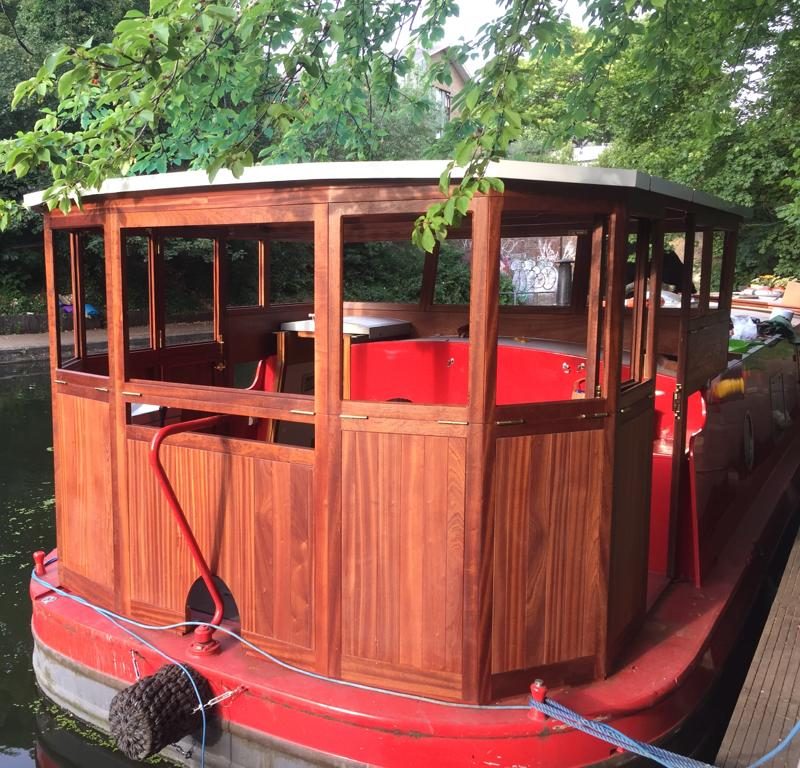
W is for Wheelhouse
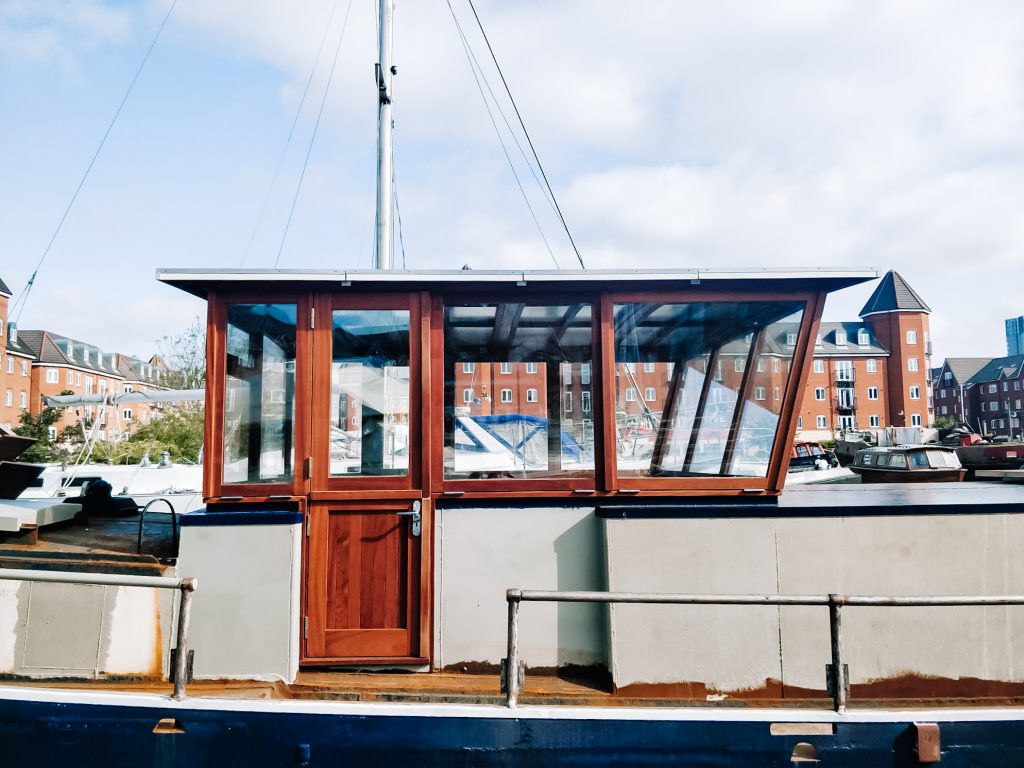
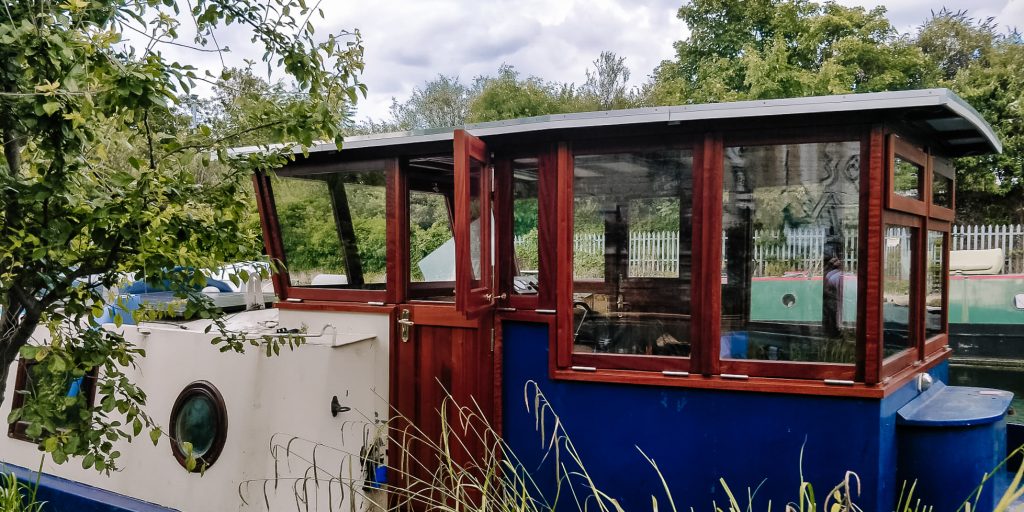
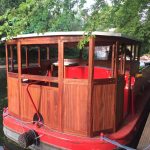
A wheelhouse is one of my favourite jobs. There is lots of interesting designing to resolve, the job itself is complex joinery and the finished article is an impressive and beautiful piece that is going to be around for potentially longer than me.
It also means a good two months pottering in the workshop, which is my happy place. Machining great piles of timber (there is around 1-2 cubic metres of timber used in a large wheelhouse), cutting joints and more sanding than I really care to think about.
The general process, once overall outline and budget have been established, is to begin with measuring and templating the space. I make a 3D model of the relevant area on my laptop so I can build the wheelhouse in CAD later, and the finer details of the angles and undulations of the surface are captured in template. This is done by shaving, scribing and cutting lots of strips of scrap wood (ply, MDF, sterling board, whatever is to hand) and screwing them together.
Transporting the template to the workshop allows me to replicate the wheelhouse base as it will be and do as much work as possible offsite. Before this, I must design every element of the wheelhouse. As each one is unique, and made of many unique parts, this takes around a week.
By carefully creating everything virtually first I can resolve many potential issues before they happen. I can see how all the part will fit and make sure everything works as it should. Additionally, it allows me to make a comprehensive materials list and cutting list, even to size all the windows ready for production.
There are 200–300 hours of manufacturing in a wheelhouse, so it’s important to be as efficient as possible. Having my advance list means I can group jobs, getting them processed as quickly as possible. This might be 2 days simply machining parts, a couple more cutting all the elements of the windows. With an audiobook on in my Bluetooth ear defenders I am a cloud of dust for a couple of weeks.
Assembling all the parts often throws up unexpected problems to solve. Even a full 3D model never completely prepares you for all real life applications. But up it goes, and once the base, windows and wall plate are in place, the roof can begin.
Making the curved pieces of the roof is something of wonder in itself. My technique, which I must admit was inspired by Gilberto Marqueti who I used to work with, involves a bandsaw to cut rough ribs and then (post planning) shaping on the spindle moulder with a guide wheel and template.
Using only the ringfence on the spindle moulder, with a 4″ block spinning at 3000rpm is a little intimidating at first. But set up correctly and with an auto feed to assist, it is safe and gives remarkable results.
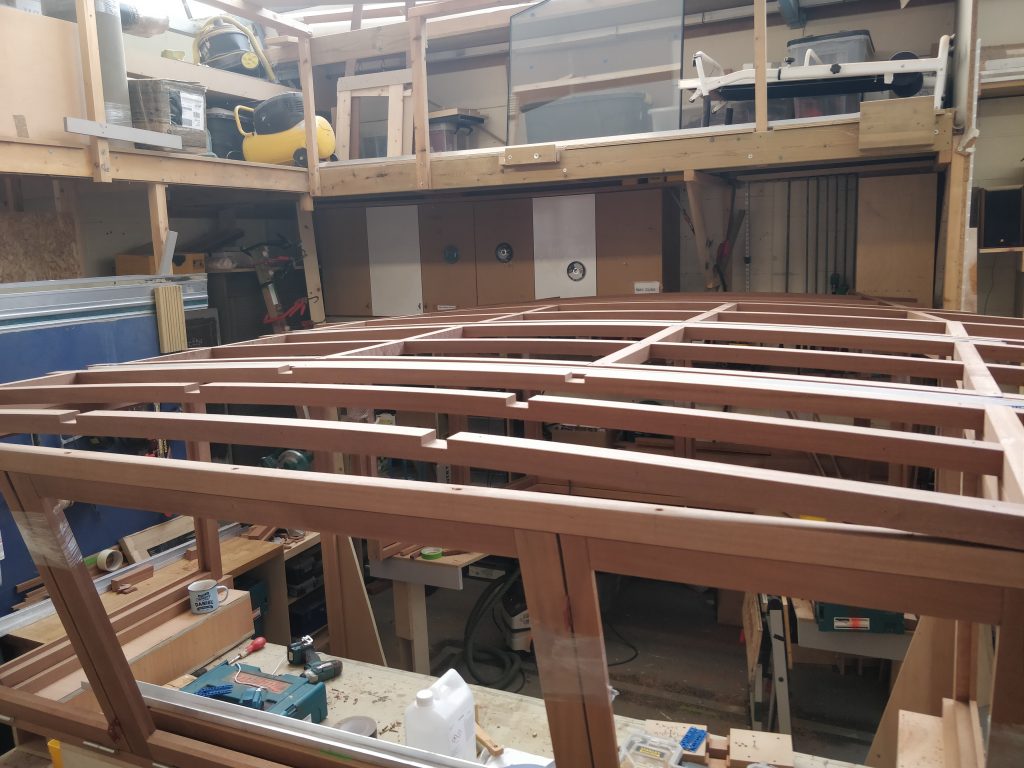
One of the most time-consuming parts of the roof is cutting all the halving joints that hold the sections together. There can be 30-60 of these, each with (of course) two halves to cut. I use an internal guttering system to allow the roof sections to remain separate but watertight. The channels in between are a matching wood, with an aluminium gutter insert. This is carefully shaped (I put it on two supports and sit on it) into a perfectly matching curve.
Structure complete, trims are added, ironmongery fitted, and all the fine details are done. The roof is clad and edged, I use Vekaplan S with aluminium trims on the side. I can then test out every element of the structure in the real world. Finally, it is time for oil.
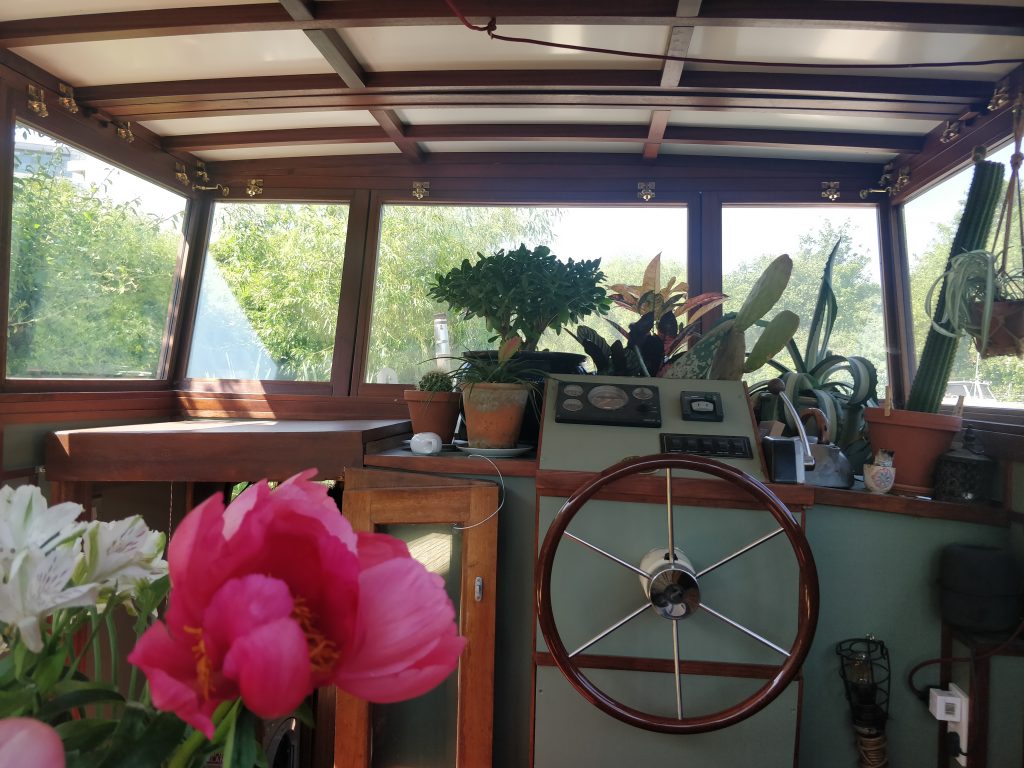
I sand everything as I go, this is the best way to get a good finish, so once I have dismantled it all and removed all the ironmongery etc, I give it a final wipe down and start applying oil. The exact process depends on the species of wood used and the desired finish, but I typically like to start with a penetrating oil.
There are multiple coats to apply, and this process will stretch over another week. In the meantime, the glass will arrive and once it’s all finished and dry, the glazing begins. All the units are placed in, and the glazing bars glued and nailed to keep it secure in perpetuity.
Glazed, oiled and as complete as can be, all the parts go to site. This can be anywhere in the network, but hopefully a spot with reasonable access and a good local café! The wheelhouse is then rebuilt onto the boat. With luck this required minimal fettling, but it can still take up to a week to complete.
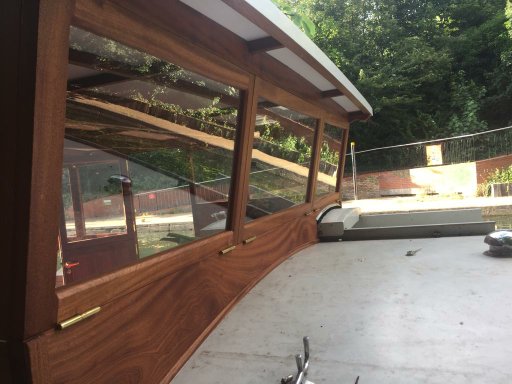
And that’s it, that’s how I build a wheelhouse. Check out the “what wood” articles if you want to know a bit more about the materials used and do, of course, get in touch if I can help you build something like this for your boat. It would be my pleasure.
Enjoy more reading in these articles.
- The Trials and Tribulations of Working on a Boat – big ways you need to know
- Social Media Posts – Stories – Announcing this is unboxing

- S is for Shelves! See the best ideas
- W is for Wheelhouse, An Awesome and Remarkable Boat Part
- Towpath Talk – Characters of the Cut – January 2026

- New Year’s Sale: Celebrate with 20% Off Everything


I think I need a new wheelhouse
That wheelhouse in the picture looks great.
Alright folks, if you’re looking for some sweet online info, this is where it’s at! Give it a shot.
I am considering getting a quote for this, I think I need a new Wheelhouse, but not sure. I will be in touch if needed, though.
Pretty standard fare, but not bad.
I like the layout.